
Habit formation
Motivation vs. discipline: which one builds habits?
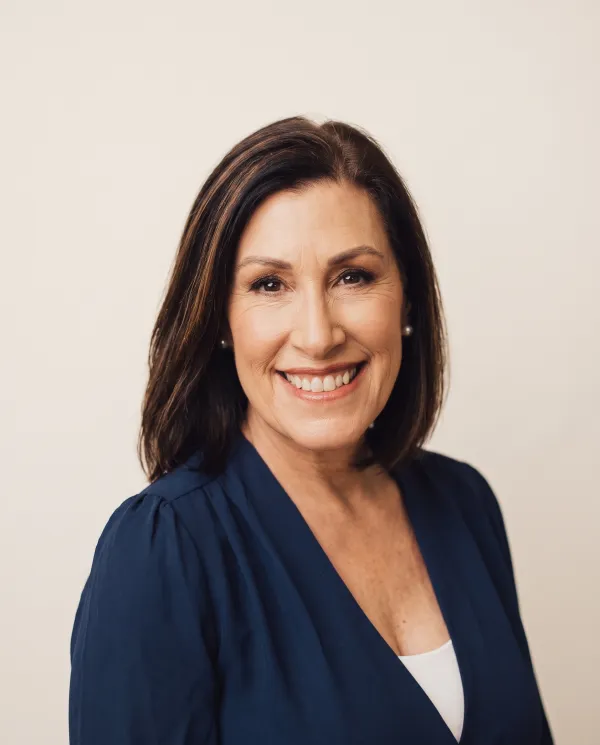 By Linda Fogg-Phillips, M.S., CEO and Co-Founder of Tiny Habits Academy · Updated November 2026
Motivation is wanting to do something. Discipline is making yourself do it when you don't want to. Both are unreliable as a long-term plan, because motivation rises and falls on its own and forcing yourself takes effort every single time. Research suggests that people who look disciplined lean on habits instead. Dr. BJ Fogg's Tiny Habits method builds those habits directly by making the behavior so small that you can do it with very little of either.
What is the difference between motivation and discipline?
Motivation is your desire to do a behavior. It can come from a goal you care about, a deadline, a burst of inspiration after a good podcast, or a scare at the doctor's office. When motivation is high, hard things feel possible.
Discipline is what people reach for when motivation is low. It means pushing through: getting up at 5 a.m. when you'd rather sleep, saying no to dessert, running in the rain. You'll also hear it called willpower or self-control.
Most advice frames this as a contest. One camp says "find your why" and stay inspired. The other says "motivation is fleeting, discipline is forever." Both camps agree on one thing, though: something inside you has to be strong enough to overcome the behavior's difficulty.
My brother, Dr. BJ Fogg, is a behavior scientist at Stanford, and his work starts from a different question. Instead of asking how to make yourself stronger, he asks how to make the behavior easier.
Why doesn't motivation last?
Because it isn't under your control. BJ describes motivation as going up and down over time, and he calls this pattern the Motivation Wave. On his Tiny Habits site he puts it plainly: "Your motivation is often low for cleaning or exercising or cutting vegetables. That's reality." He also writes, "Relying heavily on motivation to create a habit does not work" (Tiny Habits, Start Tiny).
You've probably lived this. On January 1 you buy running shoes, a meal plan and a gym membership. By February the shoes are by the door, and you feel like you've failed. You haven't. The plan was designed for the motivation you had on January 1, and that level of motivation was never going to last.
Motivation is still useful. When the wave is high, it's a great time to do things that make the future easier, like signing up for a class, clearing junk food out of the pantry or setting out your walking shoes. BJ just doesn't recommend building a daily habit that depends on it.
Is discipline the answer, then?
Discipline sounds like the grown-up solution, but the research on it is more interesting than the slogans.
People with high self-control don't resist more
In a large study of everyday temptations, Wilhelm Hofmann, Roy Baumeister and colleagues gave 205 adults beepers for a week. Participants reported 7,827 moments of desire as they happened: wanting to eat, sleep, check their phone, and so on. You might expect the people who scored high on self-control to resist temptation more often. They didn't. They reported weaker desires, fewer conflicts between what they wanted and their goals, and they used active resistance less often than people lower in self-control (Hofmann et al., 2012).
The authors concluded that high self-control seems to work "by avoiding temptations in the first place" rather than by winning more battles of will. These people set up their lives so they faced fewer fights.
Their secret looks a lot like habits
Brian Galla and Angela Duckworth took the idea further. Across six studies with 2,274 participants, they found that people with better self-control had stronger habits for things like exercise, healthy snacks, regular sleep and studying. Those habits helped explain why self-control predicted good outcomes, including homework completion, grades and staying in college. People with good habits also reported needing less effortful inhibition to do the behavior (Galla & Duckworth, 2015).
Their summary: "beneficial habits, perhaps more so than effortful inhibition, are an important factor linking self-control with positive life outcomes." The studies were correlational, so they don't prove cause and effect. They do suggest that what looks like discipline from the outside is often a set of good habits doing quiet work.
The "willpower tank" is shakier than it sounds
You may have heard that willpower is like a muscle that gets tired, so every decision drains a limited supply. That idea, called ego depletion, was popular for years. In 2016, 23 labs ran the same preregistered ego-depletion experiment with 2,141 participants. The overall effect was close to zero (Hagger et al., 2016). The authors said it was too early to reject the idea completely, but the finding is a good reason not to build your life around managing a willpower tank.
The practical point is simpler. Whether or not willpower "runs out," forcing yourself to do something you don't feel like doing is hard, and anything that requires a fight every day is fragile.
What does BJ Fogg say you need instead?
BJ's research shows that a behavior happens when three things come together at the same moment: Motivation, Ability and a Prompt. He writes it as B=MAP. "When a behavior does not occur, at least one of those three elements is missing" (behaviormodel.org).
Here's the key part. Motivation and ability trade off. A hard behavior needs a lot of motivation. A very easy behavior needs very little. So instead of trying to raise your motivation (or summon discipline to replace it), you can lower the difficulty until the behavior happens even on a low day. Our guide to the Fogg Behavior Model explains this trade-off in more detail.
That's why BJ writes on the Tiny Habits welcome page, "With my method you don't rely on willpower. That's the old, ineffective way that usually fails. With my Tiny Habits method you don't need willpower to succeed. Instead, you learn to redesign your life" (Tiny Habits, Welcome).
Motivation vs. discipline vs. design
| Motivation | Discipline | Tiny Habits design | |
|---|---|---|---|
| What it relies on | Feeling like it | Forcing yourself | Making it easy and well-prompted |
| On a good day | Works well | Works | Works, and you can do extra |
| On a hard day | Often fails | Takes real effort | Still works, because it takes seconds |
| How it feels | Exciting, then flat | Like a fight | Light, with a moment of success |
| What it builds over time | A cycle of starts and stops | Often fatigue or guilt | An automatic habit and confidence |
How do you build a habit without motivation or discipline?
You write a tiny habit recipe. It has three parts, which BJ calls the ABCs: an Anchor, a tiny Behavior and a Celebration (Tiny Habits, Welcome).
1. Pick an anchor you already do
An anchor is a routine that already happens every day, like pouring your coffee or brushing your teeth. It becomes the prompt for the new habit, so you don't have to remember. The recipe reads, "After I [anchor], I will [new habit]."
2. Make the behavior tiny
BJ defines a tiny habit as a behavior you do at least once a day, that takes less than 30 seconds, and that requires little effort (Tiny Habits, Welcome). There are two ways to get there (Tiny Habits, Start Tiny):
- A Starter Step is the first move in a longer behavior: put on your workout clothes, get out your yoga mat, open your to-do list.
- A Tiny Version is the behavior scaled way back: do two push-ups, meditate for three breaths, read one sentence.
When something is this small, motivation hardly matters. You don't need to psych yourself up to put on your shoes, and you don't need iron discipline to do two push-ups.
3. Celebrate right away
Right after the behavior, do something that makes you feel good, like a fist pump or saying "Yes!" BJ teaches that this feeling, which he calls Shine, is what wires the habit in. "Emotions create habits," he writes. "Not repetition. Not frequency. Not fairy dust. Emotions" (Fogg, TED Ideas, 2020). Our guide on how to celebrate small wins shows you how to find a celebration that feels natural.
Example recipes
| If you wish you were more disciplined about... | Tiny habit recipe |
|---|---|
| Exercise | After I start the coffee maker, I will do two push-ups. |
| Reading | After I get into bed, I will read one paragraph. |
| Healthy eating | After I unpack groceries, I will put one piece of fruit on the counter. |
| A tidy home | After I take off my shoes, I will put one thing away. |
| Writing | After I sit down at my desk, I will open my draft. |
| Flossing | After I brush, I will floss one tooth. |
Won't something that small be pointless?
It's a fair question, and it's the one I hear most. The answer is that the tiny version is the minimum, not the maximum. On a day you have energy, two push-ups can become twenty. BJ's advice is to set the bar low and keep it low, and to do more only when you feel like it.
There's a reason for this. If you raise the bar to twenty push-ups, you're back to needing motivation or discipline on the hard days. Keeping the minimum tiny protects the habit when life gets messy.
Starter Steps also tend to snowball. BJ has written about people who tell themselves they will put on their gym clothes but not really work out, and then, "surprisingly often," go all the way. He adds that he doesn't feel bad when a starter step doesn't lead to more: "Be happy with your tiny successes. Never feel guilty about not doing more" (Fogg, When Tiny Habits are "Starter Steps").
So where does motivation fit in?
Motivation still matters in two places.
First, pick habits you actually want. BJ is clear that a good tiny behavior is one you want in your life, not a "should" (Tiny Habits, Start Tiny). If you dread it, no amount of shrinking will make it stick for long.
Second, motivation is a byproduct. Many people find that after a few weeks of small successes, they start to want to do the habit. That feeling isn't motivation you summoned. It's momentum you designed. Kristy Bertenshaw, one of our coaches, wrote about this in our post on motivation: when people design for success and let themselves feel it, the momentum they build can feel a lot like motivation.
What if you're coaching someone who says they "lack discipline"?
Clients often arrive convinced that their problem is character. B=MAP gives you a way to talk about a stalled habit without blame. Ask three questions in this order: Was there a clear prompt? Was the behavior easy enough? Did they really want it? Often the fix is a better anchor or a smaller behavior, not more grit.
The Tiny Habits Coach Certification trains coaches to run this diagnosis with clients and to help them redesign habits that aren't working.
Try it for five days, free
You don't need to wait until you feel motivated. The free 5-day Tiny Habits program takes about 3 minutes a day, Monday to Friday, and a certified Tiny Habits coach checks in with you each day. You'll pick three tiny habits and practice the method in real life.
Frequently asked questions
Is discipline better than motivation?
Neither is a reliable foundation for daily habits. Motivation rises and falls, and discipline takes effort every time. Research by Galla and Duckworth (2015) suggests that people with good self-control rely on beneficial habits, so building habits directly is often the better plan.
What is the difference between motivation and discipline?
Motivation is wanting to do a behavior. Discipline, or self-control, is doing it when you don't want to. In the Fogg Behavior Model, both are attempts to overcome a behavior's difficulty. Tiny Habits works on the other side of the equation by making the behavior easier.
Can you build habits without motivation?
You need a little motivation, because you should choose a habit you actually want. But you don't need much. A tiny behavior, like two push-ups or reading one sentence, is easy enough to do even when motivation is low, as long as a reliable anchor prompts it.
Does willpower run out?
The idea that willpower is a limited resource, known as ego depletion, has been hard to replicate. A 2016 study across 23 labs and 2,141 participants found an effect close to zero. Either way, a plan that depends on daily willpower is fragile.
What do people with a lot of self-control do differently?
In Hofmann and colleagues' 2012 study of everyday temptations, people high in self-control reported weaker desires and fewer goal conflicts, and they resisted temptation less often. They seemed to avoid tempting situations in the first place rather than fight them.
How do I stay consistent when I don't feel like it?
Keep the daily minimum tiny, attach it to a routine you already do, and celebrate right after. On days you have energy, do more. On days you don't, the tiny version still counts.
Sources
All web pages accessed November 24, 2026.
- Fogg, B.J. Start Tiny. Tiny Habits. tinyhabits.com/start-tiny
- Fogg, B.J. Welcome to Tiny Habits. tinyhabits.com/welcome
- Fogg, B.J. Fogg Behavior Model. behaviormodel.org
- Hofmann, W., Baumeister, R. F., Förster, G., & Vohs, K. D. (2012). Everyday temptations: An experience sampling study of desire, conflict, and self-control. Journal of Personality and Social Psychology, 102(6), 1318-1335. doi.org/10.1037/a0026545
- Galla, B. M., & Duckworth, A. L. (2015). More than resisting temptation: Beneficial habits mediate the relationship between self-control and positive life outcomes. Journal of Personality and Social Psychology, 109(3), 508-525. doi.org/10.1037/pspp0000026
- Hagger, M. S., Chatzisarantis, N. L. D., et al. (2016). A multilab preregistered replication of the ego-depletion effect. Perspectives on Psychological Science, 11(4), 546-573. doi.org/10.1177/1745691616652873
- Fogg, B.J. (2020, January 6). How you can use the power of celebration to make new habits stick. TED Ideas. ideas.ted.com/how-you-can-use-the-power-of-celebration-to-make-new-habits-stick
- Fogg, B.J. (2015, August 20). When Tiny Habits are "Starter Steps." Tiny Habits Academy. tinyhabitsacademy.com/when-tiny-habits-are-starter-steps-2
- Fogg, B.J. (2019). Tiny Habits: The Small Changes That Change Everything. Houghton Mifflin Harcourt. (Source for the Motivation Wave and the ABC recipe.)