
Habit formation
How to stop procrastinating with Tiny Habits
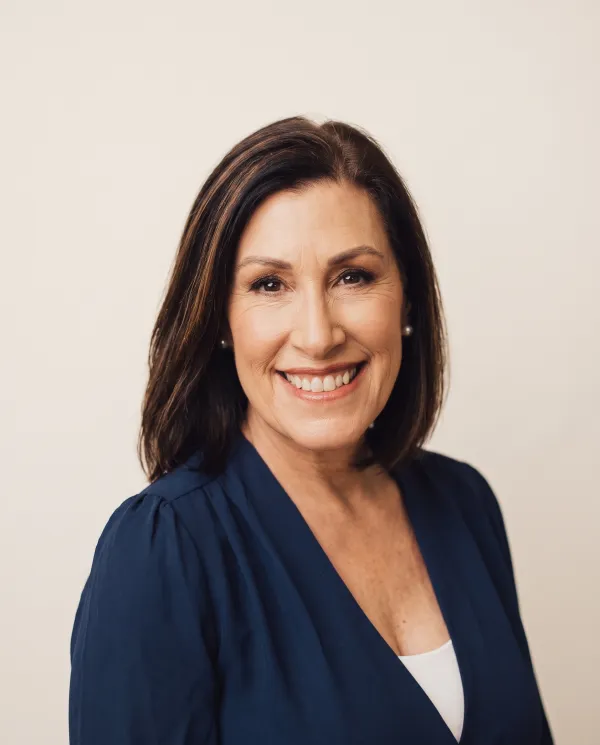 By Linda Fogg-Phillips, M.S., CEO and Co-Founder of Tiny Habits Academy · Updated November 2026
Procrastination usually isn't laziness. Research suggests it's a way to avoid the unpleasant feeling a task gives you right now. To stop procrastinating, make the first step so small that it barely registers as a task, like opening the document or putting one dish in the sink. Attach that step to something you already do, celebrate when you do it, and forgive yourself when you slip.
Why do we procrastinate?
Most of us explain our own procrastination with a character flaw. "I'm lazy." "I have no discipline." "I work better under pressure." The research tells a different story.
Piers Steel at the University of Calgary pulled together the research on procrastination in a large review and meta-analysis based on 691 correlations. The strongest and most consistent predictors were how unpleasant the task feels (task aversiveness), how far away the reward or deadline is (task delay), how confident you are that you can do it (self-efficacy), and impulsiveness, along with traits related to self-control, distractibility and organization (Steel, 2007).
Notice what's on that list. Several of those factors are about the task and how it's set up, not just about you. A task that feels big, vague and unpleasant, with a payoff weeks away, is set up to be put off.
Procrastination is a mood fix
Psychologists Fuschia Sirois and Timothy Pychyl argue that procrastination "has a great deal to do with short-term mood repair and emotion regulation." When a task feels aversive, putting it off makes you feel better right now. The cost lands later, on what they call your "future self" (Sirois & Pychyl, 2013).
That matches what most people describe. You open your inbox, see the email you've been avoiding, feel a small knot in your stomach, and close the tab. Scrolling your phone doesn't solve anything, but for a moment it makes the knot go away. Then the task gets bigger in your mind, the knot gets tighter, and the cycle repeats.
If procrastination is about avoiding a bad feeling, then trying harder or feeling guiltier won't fix it. Changing how the task feels, especially the very first moment of it, can.
How does Tiny Habits help you stop procrastinating?
My brother, Dr. BJ Fogg, is a behavior scientist at Stanford. His research shows that a behavior happens when Motivation, Ability and a Prompt come together at the same moment. He writes it as B=MAP (behaviormodel.org).
Look at procrastination through that lens:
- Motivation: you want the result, but the feeling of starting is unpleasant, so motivation at that moment is low.
- Ability: the task feels big or unclear, so it seems hard to do.
- Prompt: there's often no clear moment when you're supposed to start. "Sometime today" isn't a prompt.
When motivation is low, the most reliable lever is ability. BJ says it simply: "difficult behaviors require a high level of motivation," and "Relying heavily on motivation to create a habit does not work" (Tiny Habits, Start Tiny). Make the first step easy enough and it gets done, even on a low day. Then give it a specific prompt so you aren't relying on memory.
Step 1: Shrink the task to a Starter Step
BJ teaches two ways to make a behavior tiny. A Tiny Version scales the whole behavior down, like reading one sentence. A Starter Step is the first move in a longer sequence. His examples include "Open my sketchbook," "Write down one to-do item," "Open my to-do list" and "Put on my workout clothes" (Tiny Habits, Start Tiny).
Starter Steps are made for procrastination. BJ has written that people often feel resistance "at the moment of truth" when they think about the bigger behavior, but "Starter steps don't seem to invoke this kind of resistance." In his words, "With starter steps you overcome your initial resistance, and once you're started on the path, you just keep going" (Fogg, When Tiny Habits are "Starter Steps").
Here's how a few common procrastination tasks shrink:
| The task you keep putting off | A Starter Step |
|---|---|
| Write the report | Open the file and type the title |
| Do your taxes | Put the tax folder on the table |
| Clean the kitchen | Put one dish in the dishwasher |
| Answer the hard email | Open it and type "Hi [name]," |
| Go for a run | Put on your running shoes |
| Study for the exam | Open the textbook to the right chapter |
| Call to make the appointment | Find the phone number and write it down |
The rule is that the Starter Step counts as success on its own. If you open the file and close it again, you still did the habit. That matters, because if you secretly require yourself to finish the whole report, your brain knows it, and the resistance comes right back. BJ puts it this way: "Be happy with your tiny successes. Never feel guilty about not doing more."
Step 2: Give the Starter Step a clear prompt
"I'll start the report today" is an intention, not a prompt. In Tiny Habits, the prompt is an anchor: something you already do every day that reminds you to do the new behavior. The recipe reads, "After I [anchor], I will [Starter Step]" (Tiny Habits, Welcome).
Choose an anchor that happens at a time and place where you could actually do the Starter Step. A few examples:
- After I sit down at my desk and set down my coffee, I will open the report file.
- After I finish lunch, I will put the tax folder on the kitchen table.
- After I start the dishwasher, I will write tomorrow's first task on a sticky note.
- After I get home and take off my shoes, I will put on my running shoes.
The more specific the anchor, the better. "After lunch" is fuzzy. "After I put my plate in the sink" is clear. Our guide on habit stacking vs. Tiny Habits anchors covers how to pick a strong one.
Step 3: Celebrate the moment you start
This is the step most people skip, and it may be the most important one for procrastination.
Remember that procrastination is about avoiding a bad feeling. Celebration does the opposite. It attaches a good feeling to starting. BJ teaches that you celebrate right after the behavior with something that makes you feel successful, like a fist pump, a smile or saying "Yes!" to yourself. He calls that good feeling Shine, and he says, "Emotions create habits. Not repetition. Not frequency. Not fairy dust. Emotions" (Fogg, TED Ideas, 2020).
He also suggests celebrating the moment you remember to do the habit. If you sit down at your desk and think, "Oh, this is when I open the report," celebrate right then. That wires in the habit of remembering (Fogg, TED Ideas, 2020).
Over time, the start of the task stops being the moment you dread and becomes a moment that feels good. Our guide on how to celebrate small wins has more ways to find a celebration that works for you.
Step 4: Forgive yourself when you slip
You will procrastinate again. Everyone does. What you do next matters.
In a study of first-year university students, Michael Wohl, Timothy Pychyl and Shannon Bennett measured how much students procrastinated before their first midterm exams and how much they forgave themselves for it. Students who forgave themselves procrastinated less before the next round of exams, and the effect worked through lower negative emotion (Wohl et al., 2010; BPS Research Digest, 2010). The effect showed up among students who had procrastinated a lot the first time.
That fits everything above. If you beat yourself up, the task now carries even more bad feeling, and you'll want to avoid it more. Forgiving yourself takes some of that feeling away so you can try again.
In Tiny Habits terms, a slip is information, not failure. Ask what got in the way. Was the anchor unclear? Was the Starter Step still too big? Adjust the design, not your opinion of yourself.
What if the task is truly huge?
Some projects, like writing a thesis or clearing out a garage, take weeks. A Starter Step gets you moving, but you still need a way to keep going.
Try this approach:
- Break the project into specific behaviors. "Clear the garage" becomes "sort one box," "take the donation bags to the car," "sweep one corner."
- Pick one specific behavior and give it a Starter Step and an anchor. Do only that until it feels automatic.
- Let the habit grow on its own. On good days you'll often do more than the Starter Step. That's a bonus, not a new requirement.
- Keep the daily minimum tiny. If you raise the bar to "sort five boxes every day," you're back to needing high motivation.
BJ's view is that you build the habit first, then let it grow. Two lines in a document can turn into two pages on a good day, and the habit survives the bad days because the minimum is still two lines.
Common procrastination traps, and the tiny fix
| Trap | Why it happens | Tiny Habits fix |
|---|---|---|
| "I'll start when I feel ready." | Waiting for motivation | Start with a Starter Step that needs almost none |
| "I'll do it later today." | No specific prompt | Attach it to an anchor you do every day |
| "I need a full free afternoon." | The task feels too big | Shrink it to under 30 seconds |
| "I wasted the whole day, I'm hopeless." | Guilt adds to the bad feeling | Forgive yourself and redesign |
| "Opening the file doesn't count." | Raising the bar too early | Celebrate the Starter Step as a win |
For coaches: helping clients who procrastinate
Clients who procrastinate often come in ashamed. B=MAP lets you take the shame out of the conversation. Instead of asking "Why didn't you do it?" ask "What was the prompt? How hard was the first step? How did it feel to start?" Most of the time, the client needs a smaller Starter Step and a clearer anchor, plus permission to celebrate something that feels too small to count.
The Tiny Habits Coach Certification trains coaches to diagnose stalled behaviors with B=MAP and to coach celebration, which many adults find awkward at first.
Practice the method free for five days
The best way to beat procrastination is to practice starting. The free 5-day Tiny Habits program takes about 3 minutes a day, Monday to Friday, and a certified Tiny Habits coach checks in with you each day. You'll design three tiny habits, and you can make one of them the Starter Step for the task you've been putting off.
Frequently asked questions
What is the main cause of procrastination?
Research points to how a task feels and how it's set up. Steel's 2007 meta-analysis found that unpleasant tasks, distant deadlines or rewards, low confidence and impulsiveness were among the strongest predictors. Sirois and Pychyl describe procrastination as short-term mood repair: putting off a task makes you feel better now.
How do I stop procrastinating right now?
Pick the smallest possible first step, like opening the file or putting one item away, and do only that. Count it as a win and celebrate. If you keep going, great. If not, you've still practiced starting.
Is procrastination just laziness?
Usually not. Lazy suggests you don't care. Most people who procrastinate care a lot and feel bad about it. The research describes procrastination as a way to avoid an unpleasant feeling in the moment, which is why guilt tends to make it worse.
What is a Starter Step?
A Starter Step is the first small move in a longer behavior, such as putting on your running shoes before a run or opening your to-do list before planning your day. In Dr. BJ Fogg's Tiny Habits method, the Starter Step is the whole habit, and anything more is a bonus.
Does forgiving yourself really help with procrastination?
One study of university students found that those who forgave themselves for procrastinating before a first exam procrastinated less before the next one, partly because they felt less negative emotion. Self-forgiveness makes it easier to try again.
How long does it take to stop procrastinating?
There's no set time. Habits form at different rates for different people and behaviors. Our guide on how long it takes to form a habit covers the research. A tiny, well-anchored Starter Step that you celebrate is the fastest route we know.
Sources
All web pages accessed November 24, 2026.
- Steel, P. (2007). The nature of procrastination: A meta-analytic and theoretical review of quintessential self-regulatory failure. Psychological Bulletin, 133(1), 65-94. doi.org/10.1037/0033-2909.133.1.65
- Sirois, F., & Pychyl, T. (2013). Procrastination and the priority of short-term mood regulation: Consequences for future self. Social and Personality Psychology Compass, 7(2), 115-127. doi.org/10.1111/spc3.12011
- Wohl, M. J. A., Pychyl, T. A., & Bennett, S. H. (2010). I forgive myself, now I can study: How self-forgiveness for procrastinating can reduce future procrastination. Personality and Individual Differences, 48(7), 803-808. doi.org/10.1016/j.paid.2010.01.029
- Jarrett, C. (2010, May 4). The cure for procrastination? Forgive yourself! BPS Research Digest. bps.org.uk/research-digest/cure-procrastination-forgive-yourself
- Fogg, B.J. Fogg Behavior Model. behaviormodel.org
- Fogg, B.J. Start Tiny. Tiny Habits. tinyhabits.com/start-tiny
- Fogg, B.J. Welcome to Tiny Habits. tinyhabits.com/welcome
- Fogg, B.J. (2015, August 20). When Tiny Habits are "Starter Steps." Tiny Habits Academy. tinyhabitsacademy.com/when-tiny-habits-are-starter-steps-2
- Fogg, B.J. (2020, January 6). How you can use the power of celebration to make new habits stick. TED Ideas. ideas.ted.com/how-you-can-use-the-power-of-celebration-to-make-new-habits-stick