Habit formation
Keystone habits explained: what they are and how to start one
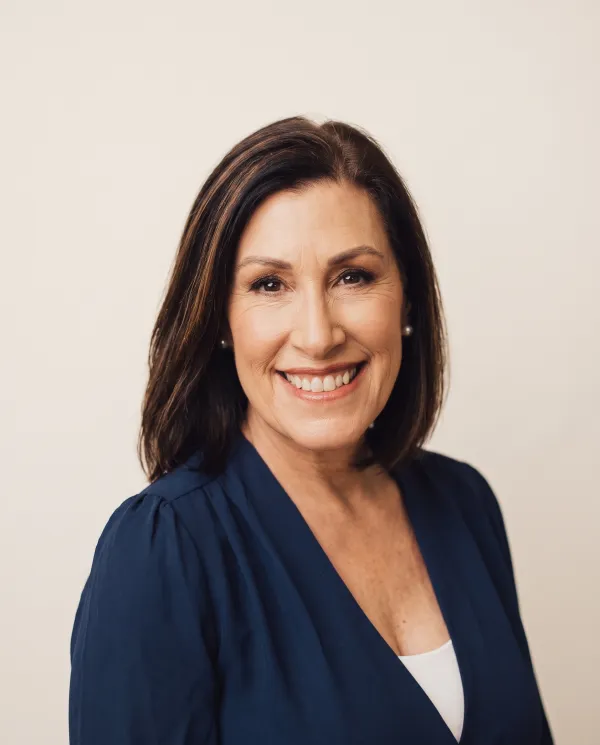 By Linda Fogg-Phillips, M.S., CEO and Co-Founder of Tiny Habits Academy · Updated November 2026
A keystone habit is a habit that, once it changes, sets off changes in other habits. Journalist Charles Duhigg popularized the term in his 2012 book The Power of Habit, with examples like regular exercise and Alcoa's focus on worker safety. You can start one the Tiny Habits way: pick a high-impact behavior you want to do, shrink it, anchor it, and celebrate.
What is a keystone habit?
A keystone habit is a habit that, when it changes, brings other habits along with it. In Duhigg's own words, "The habits that matter most are the ones that, when they start to shift, dislodge and remake other patterns." Elsewhere he calls a keystone habit "a pattern that has the power to start a chain reaction, changing other habits as it moves through an organization."
The name comes from architecture. A keystone is the wedge-shaped stone at the top of an arch, and it locks the other stones in place.
Duhigg used the idea for both people and organizations. A keystone habit might be something one person does, like exercising, or something a whole company does, like reporting every injury.
Where did the term "keystone habits" come from?
Charles Duhigg, then a reporter at The New York Times, is the one who brought the term to a wide audience. His book The Power of Habit: Why We Do What We Do in Life and Business came out in February 2012, and chapter 4 is titled "Keystone Habits, or the Ballad of Paul O'Neill."
Duhigg said he got interested in Alcoa's story because people had pointed to it as an example of "a certain kind of habit," a keystone habit. So he popularized the term more than he invented it. He built his chapter around examples from business, sports and health research.
What are examples of keystone habits?
Here are the examples you'll run into most often, and what the evidence behind each one says.
Worker safety at Alcoa
Duhigg's best-known example is Paul O'Neill, who became CEO of the aluminum company Alcoa in 1987. At his first meeting with investors, O'Neill talked about worker safety instead of profits and said he intended to go for zero injuries. To get there, Duhigg explains, any time a worker was injured, the unit's vice president had to write a report within 24 hours explaining why it happened and how it would be prevented.
According to Duhigg, the safety habit changed the way managers and workers talked to each other, and workers started sending in other ideas, too. He reports that by the time O'Neill retired in 2000, Alcoa's annual net income was five times larger than before he arrived. O'Neill explained his thinking to Duhigg this way: "If I could start disrupting the habits around one thing, it would spread throughout the entire company."
Exercise
Exercise is Duhigg's main example for individuals. He told Harvard Business Review that when people start exercising, "they start using their credit cards less. They start procrastinating less."
One study often connected to this idea comes from Megan Oaten and Ken Cheng at Macquarie University, published in 2006. Participants went through a two-month control phase, then a two-month program of regular exercise. During the exercise phase, they reported less stress, smoking, alcohol and caffeine. They also reported healthier eating, better upkeep of household chores, closer monitoring of spending and better study habits. Those other changes were self-reported, though, so it's fair to see them as a promising sign that still falls short of proof.
Keeping a food journal
In a large weight-loss trial led by Jack Hollis at Kaiser Permanente's Center for Health Research, published in 2008, nearly 1,700 adults followed a six-month program. "Those who kept daily food records lost twice as much weight as those who kept no records," Hollis said. It seems that writing down what you eat changes what you choose to eat.
The authors point out limits here, too. This phase of the trial was an uncontrolled observational study, and the food records were self-reported.
Making your bed
Duhigg writes that "making your bed every morning is correlated with better productivity, a greater sense of well-being, and stronger skills at sticking with a budget." He puts it in the same group as family dinners, and he's careful about cause and effect: "It's not that a family meal or a tidy bed causes better grades or less frivolous spending. But somehow those initial shifts start chain reactions that help other good habits take hold."
Admiral William McRaven made the same point to the University of Texas class of 2014: "If you make your bed every morning you will have accomplished the first task of the day. It will give you a small sense of pride, and it will encourage you to do another task and another and another." This one is close to my heart, and I wrote about it in your mom was right about making your bed.
Small wins
Duhigg ties keystone habits to an older idea from Karl Weick, who was at Cornell University at the time. In a 1984 paper, Weick wrote, "Once a small win has been accomplished, forces are set in motion that favor another small win." He described a small win as "a concrete, complete, implemented outcome of moderate importance."
What does the research really show about keystone habits?
The research is suggestive. Thinking in terms of keystone habits is a helpful way to look at change, but the studies behind the common examples have real limits. The Alcoa story is a business case told through interviews. The exercise study relied on self-reports. The food-journal finding comes from an uncontrolled phase of a trial, and the bed-making claim is a correlation.
Still, these examples point to something most of us have felt: one small success makes the next behavior a little easier. Tiny Habits is designed to create that feeling on purpose.
How do Tiny Habits relate to keystone habits?
My brother, Dr. BJ Fogg, founded the Behavior Design Lab at Stanford and created the Tiny Habits method. He has his own words for this ripple effect.
In Tiny Habits, BJ explains that habits can grow, getting bigger over time, and they can multiply, leading to other related habits. He calls the driver "success momentum." When you feel successful at something, even something tiny, your confidence grows and you're more motivated to do that habit again "and perform related behaviors." He adds that success momentum is created "by the frequency of your successes, not by the size."
His favorite example is the Maui Habit: after your feet hit the floor in the morning, you say, "It's going to be a great day." In his TEDxMaui talk he asks people to watch for "how the Maui habit leads to you doing other good things, right after and through the morning, and day after day. Watch for the ripple effects."
Duhigg's examples are often big commitments, like an exercise program or a company-wide safety system. Tiny Habits starts much smaller, with a version you can do on a bad day, and lets the ripple effect come from feeling successful again and again.
How do you find your keystone habit?
Start with what you want, then look for the behavior that gives you the most leverage. BJ's process for this is called Behavior Matching, and it's a good way to find a likely keystone habit.
- Name your aspiration. Pick something you want, such as "have more energy" or "feel calmer at home."
- Make a Swarm of Behaviors. Write down 10 or more specific behaviors that could help, and don't judge them yet.
- Sort for impact. Ask which behaviors would do the most to move you toward your aspiration.
- Sort for ability and desire. Ask which ones you want to do and can realistically do.
- Choose a Golden Behavior. That's BJ's term for a behavior that passes all three tests: it's effective, you want to do it, and you can do it.
A Golden Behavior with high impact is your best candidate for a keystone habit. You won't know for sure until you see what it sets off in your life, and I think that's part of the fun. Our guide to the Fogg Behavior Model explains why making a behavior easy matters more than trying to raise your motivation.
How do you start a keystone habit the Tiny Habits way?
Once you've chosen your behavior, design it so it still works on a low-motivation day. In Tiny Habits, the new behavior starts at under 30 seconds and takes very little effort.
- Shrink it. Find the smallest version of the behavior, which is often its first step.
- Anchor it. Attach it to something you already do, using the recipe "After I [anchor], I will [tiny behavior]." Choose an anchor in the same place, and use its last action.
- Celebrate right away. Smile, do a fist pump or say "Nice!" right after the behavior. BJ teaches that emotions create habits, and this is the step that wires the habit in.
- Let it grow. On days you feel like doing more, do more. On days you don't, the tiny version still counts.
- Watch for ripples. Notice what else changes. Those related behaviors are the keystone effect.
Here's what some common keystone habits look like as tiny starter recipes:
| Keystone habit | Tiny Habits starter recipe |
|---|---|
| Regular exercise | After I take off my work shoes, I will put on my walking shoes. |
| Food journaling | After I put my fork down at dinner, I will write down one thing I ate. |
| Making your bed | After I get out of bed, I will pull up my blankets. |
| Family dinners | After we sit down to dinner, I will ask everyone for one good thing from today. |
| A positive morning (BJ's Maui Habit) | After my feet hit the floor in the morning, I will say, "It's going to be a great day." |
If you'd like more recipes to choose from, see our list of 40 tiny good habits. To see how anchors differ from habit stacking, read habit stacking vs. Tiny Habits anchors.
Practice your first keystone habit with a coach
This is easiest to learn by doing it for a week with some support. Our free 5-day Tiny Habits program takes about 25 minutes to set up over the weekend, then about 3 minutes a day, Monday through Friday. A certified Tiny Habits coach checks in with you each afternoon. Join the free 5-day program.
For coaches: keystone habits with clients
Clients often arrive wanting to change everything at once. A good question to ask them is, "Which one change would make the others easier?" It turns that long list into a single place to start. From there, the coaching work is the same as with any Tiny Habits recipe: shrink it, anchor it, and coach the celebration. The Tiny Habits coach certification trains coaches to run Behavior Matching and recipe design with their clients.
Frequently asked questions
What is a keystone habit in simple terms?
A keystone habit is one habit that leads to changes in other habits. When it shifts, related behaviors tend to shift too. Charles Duhigg popularized the term in The Power of Habit (2012), using examples like exercise and Alcoa's focus on worker safety.
Who came up with the idea of keystone habits?
Charles Duhigg brought the term to a wide audience in his 2012 book The Power of Habit, in a chapter titled "Keystone Habits, or the Ballad of Paul O'Neill." Duhigg wrote that people had pointed him to Alcoa's story as an example of a keystone habit, so he popularized the term more than he coined it.
What are the most common keystone habits?
The examples you'll see most are regular exercise, keeping a food journal, making your bed and eating family dinners, plus workplace safety for organizations. The research behind them varies. Some come from studies with self-reported results, and some are correlations, so treat them as good candidates and see what changes for you.
Is exercise a keystone habit?
For many people it seems to be. In a 2006 study by Oaten and Cheng, participants who took up regular exercise for two months reported less stress, smoking and alcohol, along with healthier eating and better study habits. Those other changes were self-reported. If you'd like to try it, start with a tiny version, like putting on your walking shoes after you take off your work shoes.
How long does it take to build a keystone habit?
There's no fixed number. In the best-known habit study, new habits took a median of 66 days to become automatic, with a range of 18 to 254 days. Dr. BJ Fogg teaches that habits form faster when a tiny behavior is followed by a positive feeling. Our guide on how long it takes to form a habit covers the research.
Sources
- Duhigg, C. (2012). The Power of Habit: Why We Do What We Do in Life and Business. Random House. Chapter 4, "Keystone Habits, or the Ballad of Paul O'Neill." (Definition quote; bed-making and family-meal quotes, as quoted in Apartment Therapy, 2015.)
- Duhigg, C. (2012, February 27). How "keystone habits" transformed a corporation. Book excerpt, HuffPost. huffpost.com/entry/the-power-of-habit_b_1304550
- Fox, J. (2012). Habits: Why we do what we do. Interview with Charles Duhigg. Harvard Business Review IdeaCast. hbr.org/podcast/2012/06/habits-why-we-do-what-we-do
- Merriam-Webster. Keystone. merriam-webster.com/dictionary/keystone
- Oaten, M., & Cheng, K. (2006). Longitudinal gains in self-regulation from regular physical exercise. British Journal of Health Psychology, 11(4), 717-733. pubmed.ncbi.nlm.nih.gov/17032494
- Hollis, J. F., et al. (2008). Weight loss during the intensive intervention phase of the weight-loss maintenance trial. American Journal of Preventive Medicine, 35(2), 118-126. pubmed.ncbi.nlm.nih.gov/18617080; press release: Kaiser Permanente Center for Health Research (2008), research.kpchr.org
- McRaven, W. H. (2014). Commencement address, University of Texas at Austin. UT News. news.utexas.edu
- Weick, K. E. (1984). Small wins: Redefining the scale of social problems. American Psychologist, 39(1), 40-49. doi.org/10.1037/0003-066X.39.1.40
- Fogg, B.J. (2019). Tiny Habits: The Small Changes That Change Everything. Houghton Mifflin Harcourt. (Habits that grow and multiply, success momentum p. 169, emotions create habits, Behavior Matching, Swarm of Behaviors, Focus Mapping.)
- Fogg, B.J. Golden Behaviors. bjfogg.com/goldenbehaviors
- Fogg, B.J. Tiny surprises for happiness and health. TEDxMaui. youtube.com/watch?v=2L1R7OtJhWs
- Lally, P., van Jaarsveld, C., Potts, H., & Wardle, J. (2010). How are habits formed: Modelling habit formation in the real world. European Journal of Social Psychology, 40(6), 998-1009. doi.org/10.1002/ejsp.674