
Bad habits
How to break a bad habit (the Tiny Habits way)
 By Linda Fogg-Phillips, M.S., Director of Tiny Habits Academy · Updated November 2026
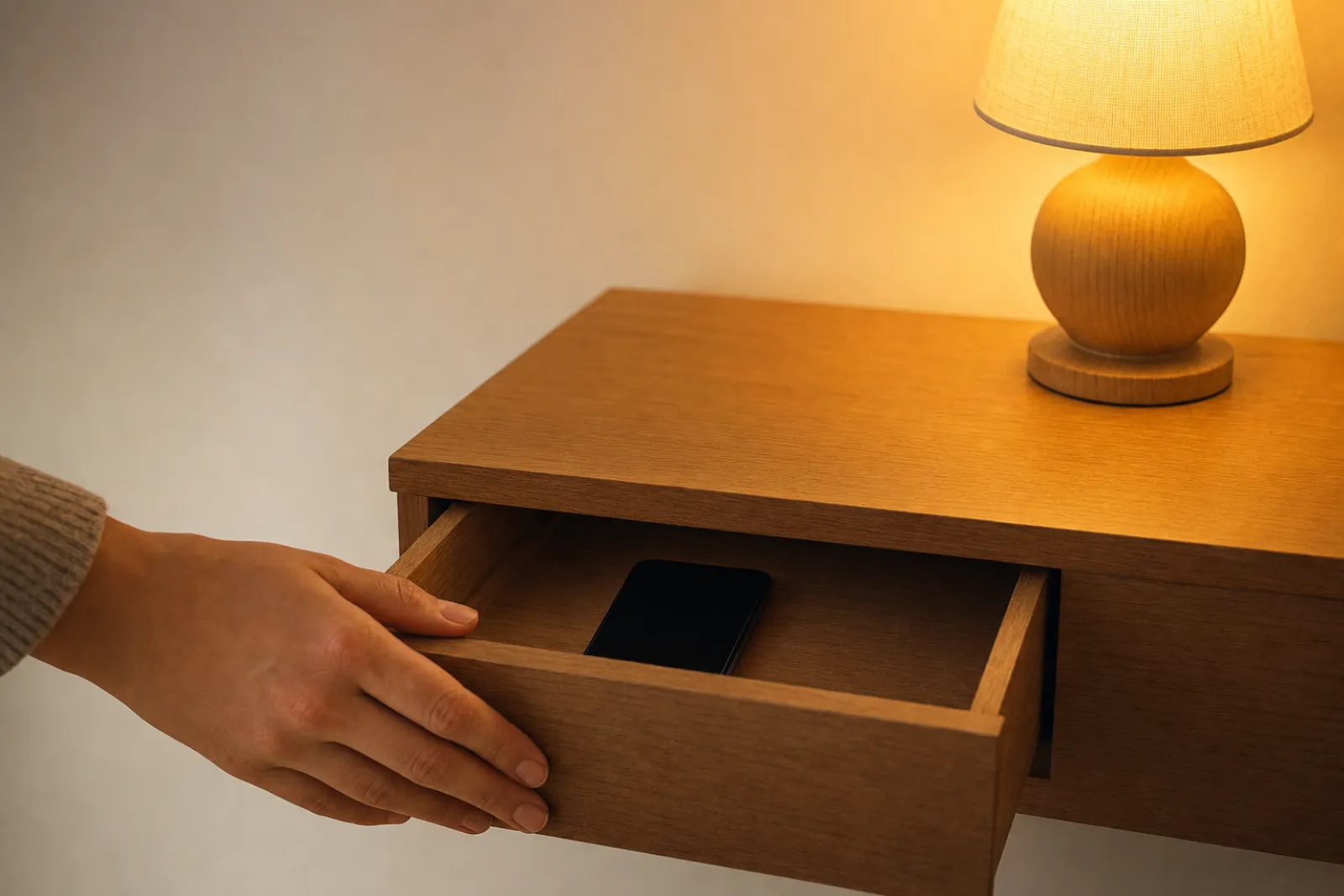
To break a bad habit, stop relying on willpower and redesign the behavior instead. Dr. BJ Fogg's Behavior Change Masterplan has three phases: create a few new positive habits first, then stop specific parts of the old habit by removing the prompt, making it harder to do and, last, reducing motivation. If you still can't stop, swap a new behavior in for the old one, and always start with the easiest piece.
Why is breaking a bad habit so hard?
Most advice treats a bad habit as an enemy you beat with willpower. Fogg argues that the word "break" itself sets the wrong expectation. It suggests that one big push, applied once, will make the habit disappear. That rarely works.
He offers a different picture: a rope full of knots. You can't untangle all the knots at once, and yanking on the rope makes things worse. You work step by step, starting with the loosest knot, because the tightest tangle is deep inside.
There's a second reason it feels hard. Failing at willpower-based plans often leaves people with shame, as if the habit proves a flaw in their character. Fogg's view is that if you followed misguided advice and failed, it isn't your fault. Good habits and bad habits form the same way. Behavior is behavior: it happens when motivation, ability and a prompt come together at the same moment. That's the Fogg Behavior Model, and it gives you three levers to work with.
What kind of habit are you trying to stop?
Fogg sorts habits into three categories:
- Uphill Habits take ongoing effort to keep and are easy to stop, like going to the gym or meditating daily.
- Downhill Habits are easy to keep and hard to stop, like hitting snooze, swearing or watching YouTube.
- Freefall Habits, such as substance abuse, can be extremely hard to stop without the safety net of professional help.
This guide is for Downhill Habits. Fogg is clear that Tiny Habits is not the answer to serious addictions. If your habit involves alcohol, drugs, gambling or anything that feels out of your control, please talk to a doctor or a licensed professional. Ask that professional whether the steps below fit alongside your care.
How do you break a bad habit, step by step?
These steps follow the Behavior Change Masterplan from Fogg's book Tiny Habits. Step 1 is Phase 1, steps 2 to 6 are Phase 2, and step 7 is Phase 3. Work through them in order, and stop when something works.
- Create a few new positive habits first. Before you touch the bad habit, build two or three easy new habits in a different area of life, such as tidiness or relationships. This teaches you what Fogg calls the Skills of Change without emotional baggage. It also shifts how you see yourself, and some unwanted habits fade on their own because they no longer fit who you're becoming.
- Break the general habit into specific behaviors. "Stop eating junk food" sounds specific, but it's a label for a tangle of habits. Write the general habit in the middle of a page and list every specific behavior around it: chips during TV, the pastry with your morning coffee, candy at the office front desk. Fogg calls this a Swarm of Behaviors. Seeing the full list can feel discouraging at first. That feeling usually passes once you spot the easy ones.
- Pick the easiest specific behavior. Choose the one you are most sure you can stop, the one that feels like no big deal. Resist the urge to start with the hardest. Early wins build skill and confidence for the tougher tangles, and some behaviors will drop away without direct work.
- Remove, avoid or ignore the prompt. Start here, because sometimes this alone solves it. Remove the prompt by redesigning your environment: turn off notifications or delete an app. If you can't remove it, avoid it: make coffee at home instead of at the shop with the pastry case. Ignoring the prompt is the last option, because it runs on willpower and willpower wears down with each refusal.
- Make the behavior harder to do. Weaken one or more links in what Fogg calls the Ability Chain. Add time (no ice cream in the freezer means a trip to the store). Add money. Add physical effort (Fogg stores his TV away so watching it means setting it up). Add mental effort (a long password you have to type each time). Or make the habit conflict with a routine you value more, like an early workout that makes late nights costly. Fogg's favorite lever is physical effort, because you can set it up while your motivation is high.
- Reduce your motivation for it, last. Motivation is hard to change, which is why it comes after prompt and ability. Look for the cause: if stress from work drives evening snacking, a calming routine before you leave work may lower the urge. Avoid demotivators like public pledges or money penalties. Fogg does not advocate them, because they don't address the cause and often lead to guilt.
- If you still can't stop, swap in a new behavior. Keep the old prompt and attach a new behavior to it. Choose something you actually want to do, not just something that's "good for you," or the swap won't last. Then make the new behavior easier and more motivating, make the old one harder and less motivating, and rehearse the swap a few times, celebrating each time to connect the old prompt to the new habit.
When one specific behavior is gone, celebrate and go back to your list for the next one.
For help with Phase 1, the free 5-day Tiny Habits program lets you practice a new tiny habit for a week, with a certified coach checking in each day.
Why does the order matter?
Most people start with motivation. They try to scare themselves, shame themselves or psych themselves up. Fogg's Masterplan uses a different order: prompt first, then ability, then motivation. Prompts and ability are things you can change with a one-time redesign of your environment. Motivation shifts from hour to hour, so a plan that depends on it tends to fail on your worst day.
The same logic explains why swapping comes last. Much popular advice says you must always replace a bad habit with a good one. In Fogg's system, swapping is the most complicated move, so you use it only after simpler fixes haven't worked. A swap keeps the old prompt as its anchor, the idea explained in our guide on habit stacking vs. Tiny Habits anchors.
What does this look like in real life?
Here's a hypothetical example. Say your general habit is "too much phone time at night." Your list of specific behaviors might include scrolling in bed, checking email after dinner, and watching videos while you brush your teeth.
Videos during brushing feels easiest, so you start there. The prompt is picking up the phone on the bathroom counter. You remove it by charging your phone in the kitchen, and that one change also cuts scrolling in bed. After dinner email is harder, because you don't want to miss anything urgent. So you work on ability: you sign out of the email app on your phone, which adds mental effort. If you still slip, you swap: "After I put my plate in the dishwasher, I will text one friend," a behavior you enjoy that uses the same moment.
In Tiny Habits, Fogg describes a Behavior Design Boot Camp participant named Juni who used this kind of step-by-step approach on a sugar habit. She first built new habits that had nothing to do with sugar, then untangled the easiest behaviors first, starting by skipping dessert after dinner for one day, then two. When she slipped, she treated it as a puzzle to study rather than a failure.
For coaches: helping clients untangle habits
Clients usually arrive wanting to tackle their hardest habit first, and usually with a lot of shame attached. The Masterplan gives you a structure that lowers both. Phase 1 lets them succeed at something before facing the hard habit. The Swarm of Behaviors turns a vague goal into a list you can work through together. And the prompt, ability, motivation sequence gives every session a clear next step that doesn't depend on willpower.
Know your scope. Downhill Habits are coaching territory. Freefall Habits need a referral to a qualified professional. Tiny Habits certification covers the full Masterplan, including the step-by-step swap process, and how to coach clients through it.
Frequently asked questions
How long does it take to break a bad habit?
There is no reliable single number. Some specific habits stop as soon as you remove the prompt, while deeply wired habits take longer and need several rounds of redesign. Untangling one specific behavior at a time and celebrating each success builds momentum. For the research on how long new habits take to form, see How long does it take to form a habit?
Should I replace a bad habit with a good one?
Sometimes, but not first. In Fogg's Behavior Change Masterplan, swapping is the third phase. You first build new habits and try to stop specific behaviors by redesigning the prompt, ability and motivation, because many habits can simply be stopped.
What should I do if I slip back into the habit?
Treat the slip as information. Look at what prompted it and what made it easy, adjust your design, and keep going. Shame makes change harder.
Do punishments help break bad habits?
Fogg does not advocate them. Demotivators like public pledges or money penalties don't address the cause of the habit and often lead to stress, failure and self-criticism. In his words, we change best by feeling good, not by feeling bad.
Sources
- Fogg, B.J. (2019). Tiny Habits: The Small Changes That Change Everything, chapter on untangling unwanted habits and the Behavior Change Masterplan appendix. Houghton Mifflin Harcourt.
- Fogg, B.J. (2019, December 31). Reverse your bad habits with just a handful of tiny changes (excerpt from Tiny Habits). Popular Science
- Fogg, B.J. (2020). Interview on the Behavior Change Masterplan. The Jordan Harbinger Show, episode 306. jordanharbinger.com
- Fogg, B.J. Fogg Behavior Model. behaviormodel.org