Coach certification
How to become a life coach
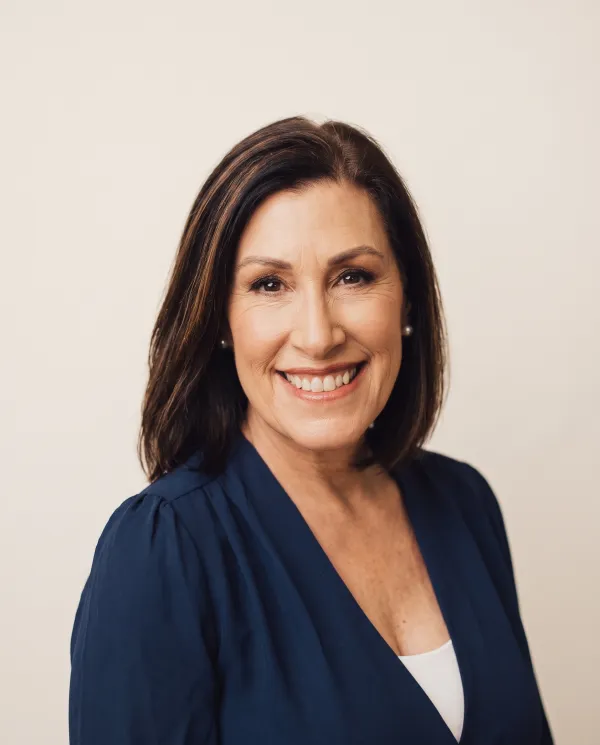 By Linda Fogg-Phillips, M.S., CEO and Co-Founder of Tiny Habits Academy · Updated November 2026
In the United States you don't need a license to become a life coach, because no state licenses the work. Most good coaches still follow the same path: choose who you want to help, get coach-specific training, practice with real clients under supervision, and then decide whether a credential such as the ICF's ACC or the NBC-HWC board certification is worth it for your goals. A method certification, like Tiny Habits Coach Certification, adds a specific way to help clients change behavior. It's a specialization, and it doesn't replace a general coaching credential.
What does a life coach actually do?
A life coach helps people make changes they've chosen for themselves, in their work, relationships, health habits, money habits or daily routines. The International Coaching Federation (ICF), the largest professional body for coaches, defines coaching as "partnering with clients in a thought-provoking and creative process that inspires them to maximize their personal and professional potential" ([1]).
Coaching looks forward. You help a client decide what they want, plan how to get there and keep going when it gets hard. That's different from therapy, which diagnoses and treats mental health conditions. Keeping that line clear is one of the most important parts of the job, and I'll come back to it below.
In practice, a lot of coaching comes down to behavior. A client says they want to feel less overwhelmed, get healthier or be a calmer parent. Then the two of you have to turn that wish into specific things they'll do on a normal Tuesday. That's where a behavior change method earns its place.
Do you need a license to be a life coach?
No. A 2024 review by Utah's Office of Professional Licensure Review looked at whether the state should regulate life coaching. It found that no state currently requires a license for life coaches, though several states have tried to pass legislation. The office recommended against creating a license or even a voluntary registry ([2]).
The same review explains why training still matters. It found that coaches' training ranges from master's degrees and years of experience to nothing beyond "life experiences." It also flagged coaches who advertised help with mental health conditions without being licensed to treat them ([2]). Clients can't tell good coaching from bad by the title alone, so your training, your method and how you describe your work are what set you apart.
How do you become a life coach, step by step?
Here's the path I'd suggest to anyone starting out.
- Choose who you want to help. "Everyone" is hard to coach and harder to explain. Pick a group you understand, such as new managers, parents of young kids, people changing careers, or clients who want healthier daily habits.
- Learn the core skills of coaching. These include listening well, asking open questions, reflecting back what you hear, and helping clients make their own decisions. Look for training that's specifically about coaching, not general self-help.
- Learn at least one method for behavior change. Clients usually know what they want. They get stuck on how to make it happen day after day. A named, research-based method gives you a way to design changes and to troubleshoot them when they stall.
- Practice on real people with feedback. Reading about coaching is not the same as coaching. Look for supervised practice, mentor coaching or an apprenticeship.
- Decide whether you need a credential. If you plan to coach inside companies or healthcare settings, a credential may be expected. If you'll coach individuals you find yourself, it may matter less. More on this below.
- Set up your practice. Write a simple coaching agreement, decide how you'll describe your services, and be clear about what you don't do. Many coaches also get business insurance and keep basic session notes.
- Keep learning. Coaching skills grow with practice and supervision. Most credentials also require continuing education to renew.
You can do steps 2 and 3 in either order. Some people take a broad coaching program first and add a method later. Others start with a method because they already work with clients as a trainer, nurse, teacher or counselor, and they want a better tool for behavior change.
What does life coach certification really mean?
"Certified life coach" can mean very different things. Anyone can start a training school and issue certificates, so the word "certified" tells you little until you know who certified you and what you had to do. It helps to sort what you'll see into three kinds.
ICF credentials (ACC, PCC, MCC)
The ICF issues three credentials. They're the most widely recognized general coaching credentials, and each one requires training, logged coaching hours, mentor coaching, a performance evaluation and an exam.
| ICF credential | Coach-specific education | Coaching experience | Other requirements |
|---|---|---|---|
| ACC (Associate Certified Coach) | 60 hours | 100 hours with at least 8 clients, 75 of them paid | 10 hours of mentor coaching over at least three months, a performance evaluation, and the ACC exam ([3], [4]) |
| PCC (Professional Certified Coach) | 125 hours | 500 hours, at least 450 of them paid | 10 hours of mentor coaching, a performance evaluation, and the PCC-MCC exam ([5]) |
The ICF counts coaching experience hours only after you begin coach-specific education. A 30-minute session counts as half an hour, and coaching done inside a training class with other students doesn't count ([6]). If your training isn't ICF-accredited, you can still apply through the ICF's Portfolio path, but ICF reviews that education as part of your application ([4]).
NBHWC board certification (NBC-HWC)
If you want to work as a health and wellness coach, especially in healthcare, the National Board for Health & Wellness Coaching offers the NBC-HWC credential. To sit the board exam you need to finish an NBHWC-approved training program, log 50 coaching sessions after your program's skills assessment, hold an associate degree or higher (or have 4,000 hours of work experience in any field), and pay $500 in fees ($100 to apply and $400 for the exam) ([7]).
NBHWC says it has more than 138 approved programs. One of the board's five content areas is "Theories, Models and Approaches to Behavior Change," which tells you how central behavior change is to health coaching ([7]).
Method certifications
A method certification trains you in one specific approach and licenses you to use it with clients. Tiny Habits Coach Certification is one example. It isn't a general coaching credential or a board credential. It teaches you to coach one research-based method well.
Many coaches hold more than one of these. A coach might hold an ICF credential for general coaching skills and a method certification for the behavior change work their clients need most. Our guide to the best habit and behavior change coach certifications compares programs side by side, with prices and lengths.
Which life coach certification is right for you?
Start with where you want to work and who will hire you.
- If you'll coach in companies or apply for contracts that ask for a credential, look at ICF-accredited training and the ACC.
- If you'll coach health and wellness clients, or want to work alongside doctors and health systems, look at NBHWC-approved programs and the board exam.
- If you already have a professional role, such as therapist, nurse, dietitian, trainer, teacher or manager, and you want a specific tool for helping people change their habits, a method certification may be the fastest useful step.
- If you're brand new, a broad coaching program gives you the foundation, and a method can come after.
Before you pay for any program, ask three questions. What will I be able to do for clients when I finish? How much supervised practice with real people is included? And who stands behind the certificate?
Why learn a habit method as a life coach?
Most coaching goals depend on habits. A client who wants more energy needs to change what they do in the morning. A client who wants a calmer home needs new routines at dinner and bedtime. Clients are often motivated in the first session and then lose momentum by the third week.
My brother, Dr. BJ Fogg, is a behavior scientist at Stanford, and he found that this pattern is predictable. His Fogg Behavior Model says a behavior happens when motivation, ability and a prompt come together at the same moment ([8]). Motivation goes up and down, so plans that depend on staying highly motivated tend to fail. He has said that people seem to be terrible at predicting their future motivation, and keep assuming they'll stay as motivated as they feel the day they make the plan ([9]).
The Tiny Habits method works around that. Instead of asking clients to push harder, you help them design behaviors so small they can do them on a bad day, attach each one to a routine they already have, and celebrate right after so it feels good. Our guide to the Fogg Behavior Model explains why this works, and micro habits shows the recipe in action.
For a coach, the practical gain is a way to troubleshoot without blame. When a client's new habit stalls, you can check three things: was there a clear prompt, was the behavior easy enough, and did they actually want it? That conversation is a lot more useful than "try harder next week."
Where does Tiny Habits Coach Certification fit?
Tiny Habits Coach Certification is a specialization for people who already help others change, or who are building a coaching practice and want a specific method. It's open to anyone who helps people change behavior: health and life coaches, doctors, nurses, therapists, counselors, dietitians, personal trainers, teachers, consultants and financial advisors ([10]).
Here's what it involves ([10]):
- Six self-paced modules with a dedicated faculty member, covering recipe design, prompts, emotions and celebration, troubleshooting, and breaking bad habits.
- A two-week supervised apprenticeship where you coach real participants, about 45 minutes a day.
- Training in four coaching formats: one-on-one, group, the Tiny Habits coaching platform and workshops.
- A listing in the Tiny Habits coach directory and ongoing training.
Most people finish in under two months. You need a Tiny Habits license to keep coaching with the method after your first year, and the first year is included ([10]).
It isn't an ICF credential, and it isn't an NBHWC-approved program, so it doesn't on its own make you eligible for the ICF exams or the NBC-HWC board exam. If you plan to apply for an ICF credential later, check with the ICF how any training you've taken would count toward its education hours.
If you'd like to see the method from the client's side first, our free 5-day Tiny Habits program takes about three minutes a day, and a certified coach checks in with you each afternoon. When you're ready, you can learn more about Tiny Habits Coach Certification.
What should a life coach not do?
Stay inside the scope of coaching. Utah's review concluded that coaching doesn't pose a safety risk as a general practice, but that it can when coaches without qualifications stray into treating mental health conditions. It also listed other harms, such as predatory business practices ([2]). A few habits protect you and your clients:
- Don't diagnose, and don't promise to treat or cure any condition.
- Refer clients to a licensed professional when you see signs of a mental health crisis, an eating disorder, addiction or another clinical concern.
- Describe your services honestly. Say what training you have, and don't call yourself "licensed" as a coach, since no such license exists.
- Write a coaching agreement that explains what coaching is, what it isn't, and how you handle confidentiality.
If you're already a licensed professional, follow your own licensing board's rules on how coaching fits with your clinical work.
Frequently asked questions
How long does it take to become a life coach?
It depends on the path. You can start coaching right away, since no license is required. An ICF ACC takes at least 60 hours of training plus 100 hours of client coaching, which usually takes months. Tiny Habits Coach Certification takes under two months, including a two-week apprenticeship with real participants.
Do I need a degree to become a life coach?
No degree is required to coach. The NBC-HWC board exam requires an associate degree or higher, or 4,000 hours of work experience in any field. ICF credentials are based on training, coaching hours and assessments, not a degree.
What is the best life coach certification?
The best one depends on your goal. ICF credentials are the most widely recognized general coaching credentials. NBC-HWC is the board credential for health and wellness coaches. A method certification such as Tiny Habits teaches you a specific, research-based way to help clients change behavior, and many coaches add one to a general credential.
Is life coach certification worth it?
Training is worth it, because clients get better coaching and you get a clear way to explain what you do. Whether a formal credential is worth it depends on who will hire you. Companies and healthcare settings are more likely to ask for one than individual clients are.
Can a life coach work with clients on health habits?
Yes, as long as you stay within coaching. You can help clients design and keep habits they've chosen, such as walking after lunch or going to bed earlier. You shouldn't diagnose or treat medical or mental health conditions, and you should refer clients to a licensed professional when that's what they need.
What's the difference between a life coach and a habit coach?
A life coach works on a broad range of goals. A habit coach focuses on the daily behaviors that get a client to those goals. Many life coaches use a habit method in their work, because most goals depend on what a client does day to day.
Sources
All web pages accessed November 24, 2026.
- International Coaching Federation. About ICF. coachingfederation.org/about
- Utah Office of Professional Licensure Review. (2024, November). Sunrise Review: Life Coaching. Utah Department of Commerce. commerce.utah.gov/wp-content/uploads/2024/11/OPLR-Sunrise-Review_Life-Coaching_vF.pdf
- International Coaching Federation. Associate Certified Coach (ACC). coachingfederation.org/credentialing/icf-credentials-overview/acc
- International Coaching Federation. (2024, November 18). Associate Certified Coach (ACC) Candidate Guide. coachingfederation.org/wp-content/uploads/2024/11/ACC-Candidate-Guide-11.18.24-final.pdf
- International Coaching Federation. Professional Certified Coach (PCC). coachingfederation.org/credentialing/icf-credentials-overview/pcc
- International Coaching Federation. Credentialing Experience Requirements. coachingfederation.org/credentialing/prepare-for-icf-credential-application/experience-requirements
- National Board for Health & Wellness Coaching. Get Board Certified. nbhwc.org/get-board-certified
- Fogg, B.J. Fogg Behavior Model. behaviormodel.org
- The Art of Manliness. (2021, December 29). Podcast #581: The Tiny Habits That Change Everything [interview with BJ Fogg, transcript]. artofmanliness.com/character/self-improvement/podcast-581-the-tiny-habits-that-change-everything
- Tiny Habits Academy. Tiny Habits® Coach Certification. tinyhabitsacademy.com/certification